Posted in Dinner, Food, For Kids/Parent, Lunch, Peninsula, South Bay

Pizza and Pasta Rule at Osteria Coppa

Perfectly acceptable pasta and mediocre slices of pizza are easy to find.  If you haven’t had a decent interpretation of either in a while, you can easily forget what a great version tastes like.

Let’s just say I’ve now been reminded.

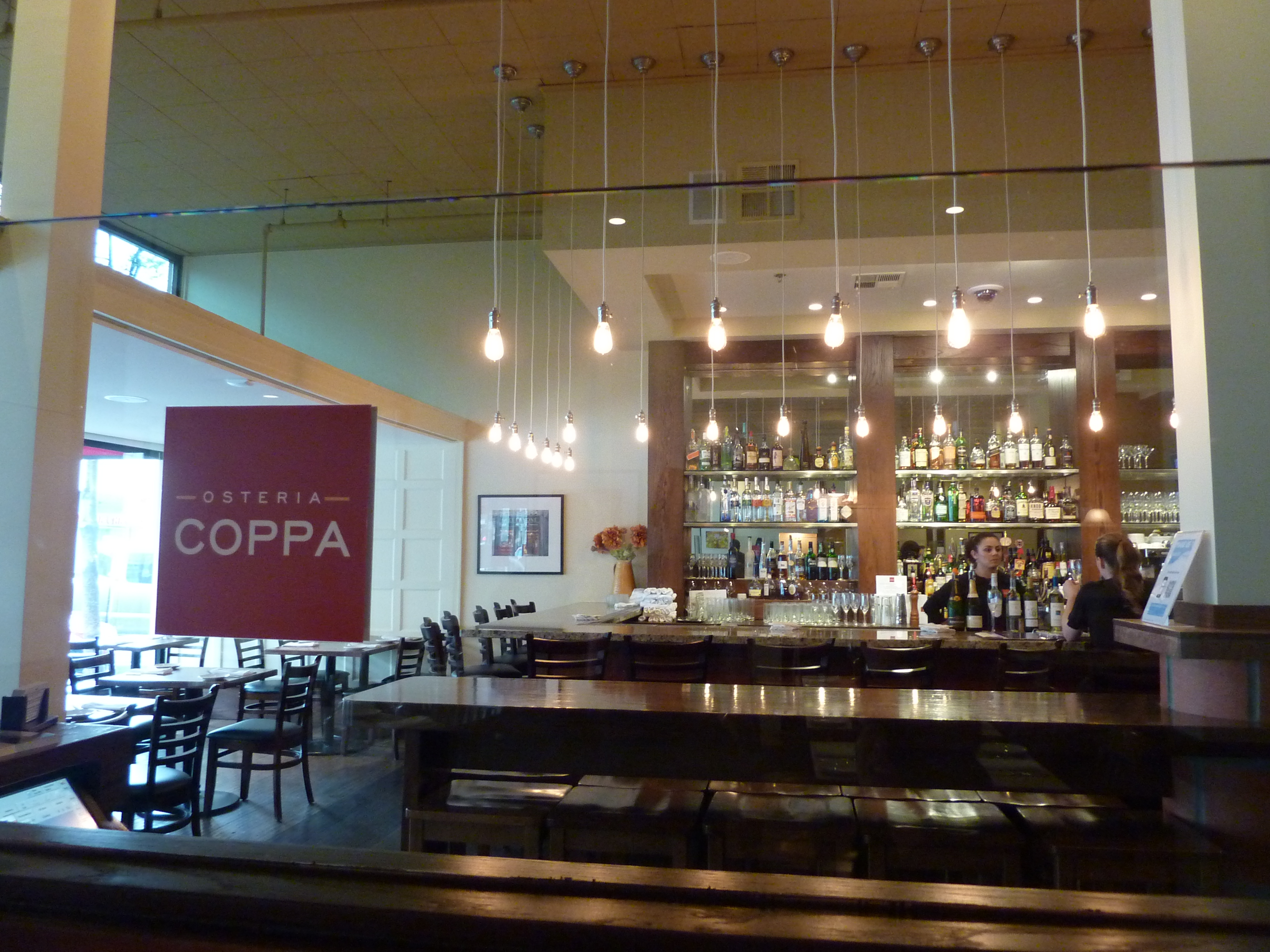
Osteria Coppa in San Mateo is owned by the folks who run Sam’s Chowder House in Half Moon Bay; a Peninsula institution.  Executive Chef Chanan Kamen takes pride in his handmade pastas and hand-stretched pizzas, and it shows.  His resume includes Michelin-starred Quince and Jardinere in San Francisco, and Picholine and Tabla in New York City.

Osteria Coppa is a farm-to-table restaurant, meaning they use organic, locally sourced, artisanal ingredients.  They cure their salumi in-house, fire up hand-made pizzas in their stone ovens, and artfully make their own pastas.

I paid two visits to the restaurant and each time focused solely on the pizzas and pastas, the latter of which has been getting some positive mentions in both the San Francisco Chronicle and the San Jose Mercury News and The San Francisco Examiner, lately.

Braised Radicchio, Panchetta and Aged Balsamico Pizza

I tried both the house-made sausage, speck and crimini mushroom pizza, as well as the pancetta, braised radicchio and aged balsamico.  Both thin-crust, Neapolitan-style pies were fantastic for this simple reason: the fresh, creative topping combinations worked perfectly on an exceptional crust.

The flavors on both pizzas were well conceived, but I was particularly impressed with the pancetta, braised radicchio and aged balsamico pie.  It was one of the best pizzas I have had in a while.  I fell in love with the wonderfully tangy sweetness of the balsamico.  It made me wonder why I hadn’t tasted balsamic vinegar on a pizza before!  It was the perfect match for the meaty, fatty goodness of the of pancetta bits.  And the radicchio was an edgier stand-in for the typical red onions.

My dining companion at one point declared, “Even the crust is great on this pizza!”  The crust was perfectly crisp and charred on the bottom, pillowy soft and sweet on the inside.  If you order just one pie while you’re there, this is the one.

As far as Osteria Coppa’s pastas go, the San Jose Mercury News has called them “exquisite”, and even named the Tagliatelle Bolognese one of the Top Ten Dishes of 2010.
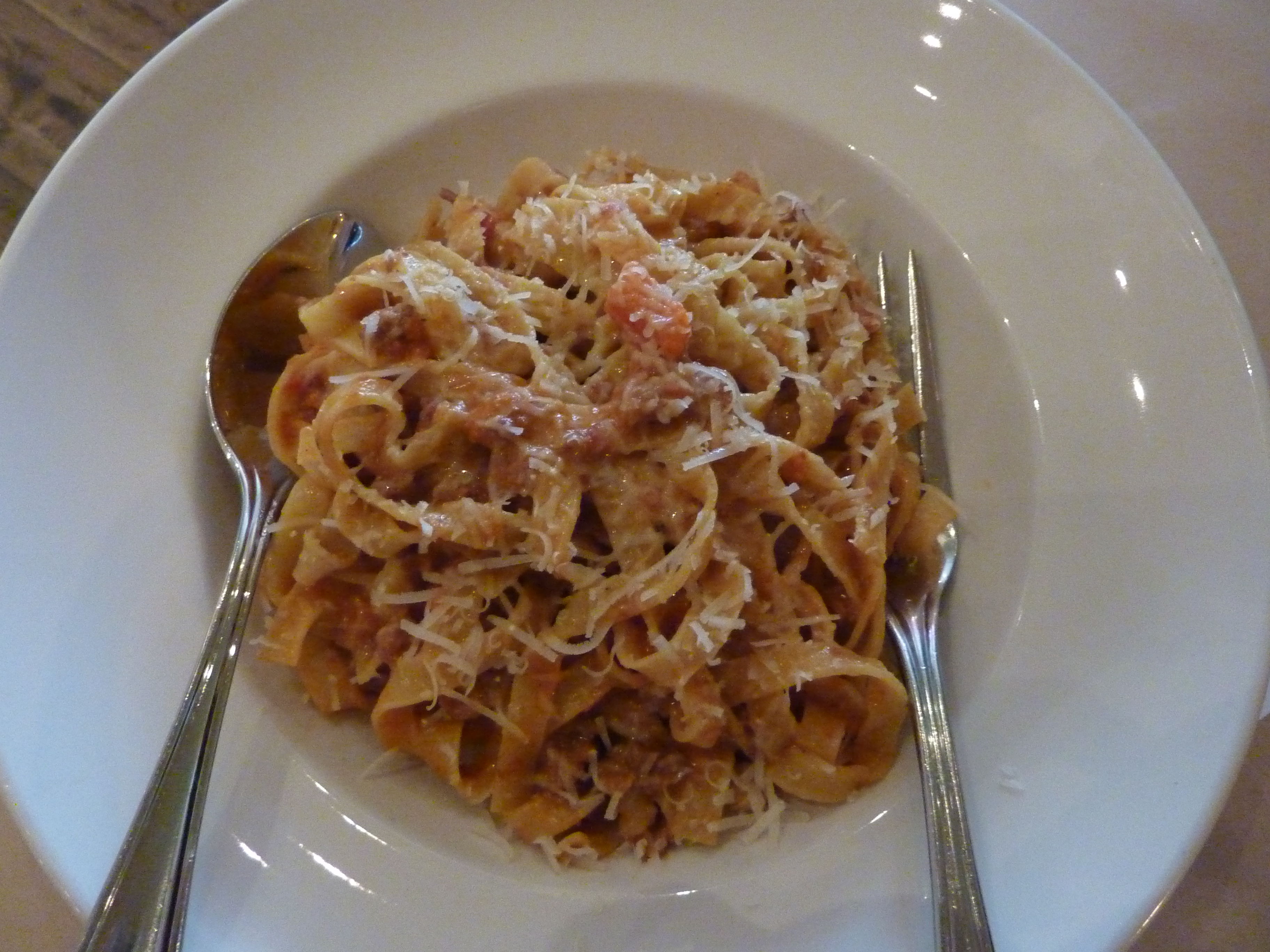
Tagliatelle Bolognese

There are plenty of places that make their own pastas, but they either make the mistake of overcooking it so that it becomes mushy (fresh pasta should take no longer than a few minutes to cook), or the flavor is way too doughy and floury, without enough focus on fresh, quality ingredients.

There’s no risk of either here.  Preparation, ingredients and technique all have equal importance.  The Fettuccine Marinara with cauliflower and broccoli rabe was perfectly al dente, and the noodles were delicious with a wonderful eggy, almost buttery flavor.  The freshness of the vegetables was obvious and actually made the dish seem light.

But I can confirm that the recent attention on the Tagliatelle Bolognese is well warranted.  The dish was nothing short of fabulous with its smooth, rich pork and deliciously creamy sauce.  And once again, the noodles themselves were the star in both texture and taste.  But for all the richness of this dish, it never seemed overly heavy.
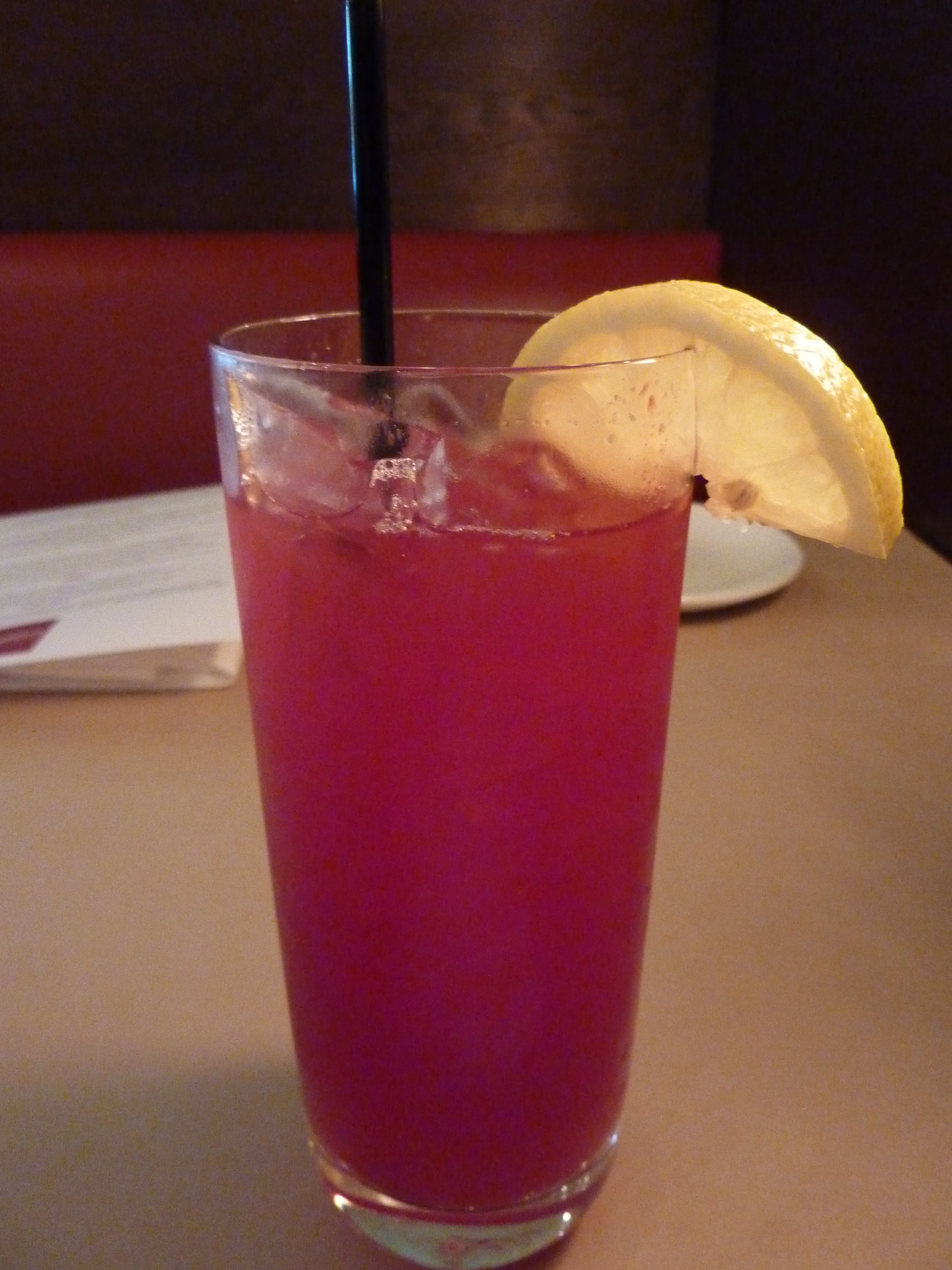
Blood Orange Lemonade

Aside from the pizzas and pastas, the house-made blood orange lemonade is more proof of the inventive items on the menu.  It’s a fun twist on the typical lemonade and it shows how the restaurant takes full advantage of their access to great fruits and vegetables.  They use unconventional ingredients and combine them in a way that makes you feel like every item is fully realized.

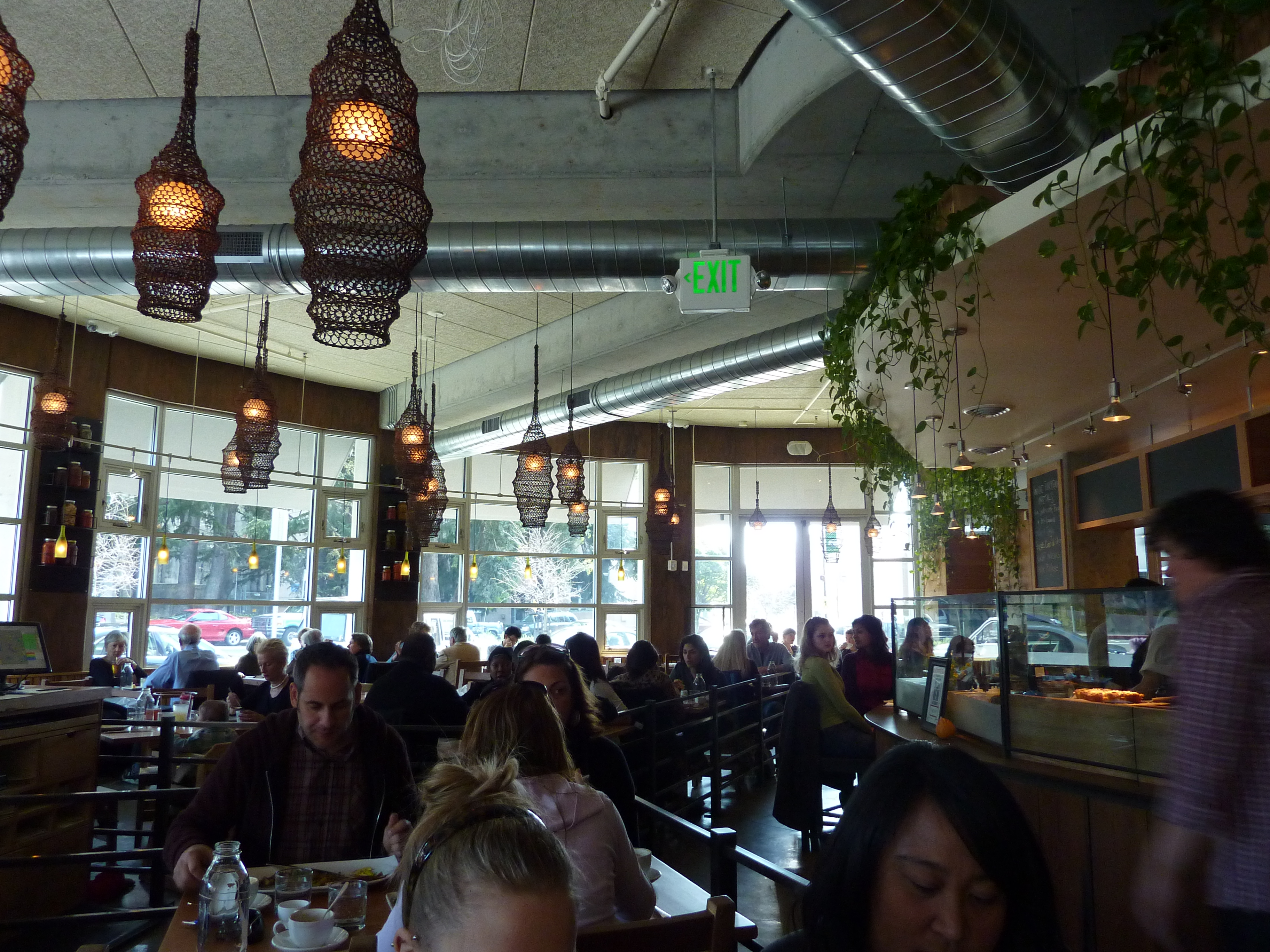
Service is casual but expert.  There’s no pretentiousness from the staff, and families are welcome.  In the Bay Area, that’s a welcome change for a restaurant of this caliber.  They’ve done a successful job of creating a warm, sophisticated yet easy vibe here.  Chef Kaman was an expert pasta maker while at Quince, and the peninsula is lucky he’s decided to bring his four-star talents to suburbia.
Posted in Food, San Francisco

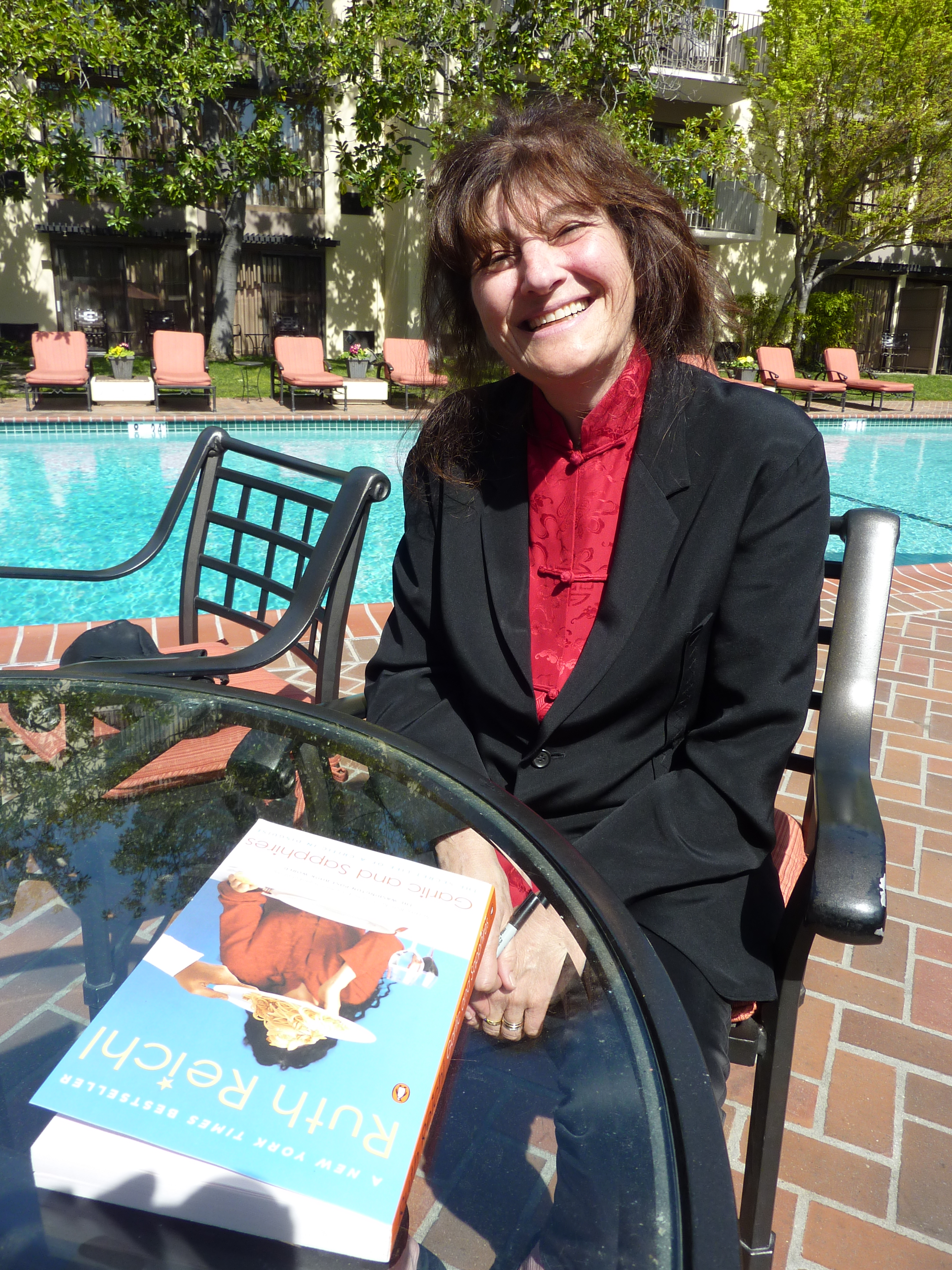
Life After Gourmet is Good: A Chat with Ruth Reichl

Ruth Reichl is one of the most influential names in food. Her storied career includes stints at the Los Angeles Times as a restaurant critic and food editor, as well as the restaurant critic for the New York Times. She is also the author of five bestselling books, the recipient of six James Beard Awards, and spent 10 years as the Editor-in-chief of the now defunct Gourmet magazine.

But as any resilient woman will tell you, when one door closes, a few other doors open. She’s now an editor-at-large for the mega-publisher, Random House, is currently writing three new books, and on April 6th, will make her debut as one of the new judges on Top Chef Masters.

She was kind enough to carve out some time to chat with me while on a recent trip to Palo Alto for a speaking engagement. I asked her about how life has changed since the closing of Gourmet magazine, how she feels about food bloggers, and what she really thinks about Ruth Bourdain.

ELAINE: What was life like after Gourmet magazine shut its doors?
RUTH: At first I thought, “Oh my God, I’ll never have another job!” and I immediately made a deal to write three books, which I’m working on, and that’s great. I’m finishing my first fiction novel, and I promised to write a cookbook and then a memoir about my time at Gourmet and its closing.

But then about eight months after the magazine closed, I was literally getting a job offer a day. The most interesting is one I can’t talk about. Let’s just say it’ll be the food magazine of my dreams. I’m very lucky. (NOTE: We know now that Ms. Reichl will be running the Gilt Groupe’s “Gilt Taste” website.)

ELAINE: And you’re going to be on Top Chef Masters! What made you want to take that offer?
RUTH: I just thought it would be fun! I was kind of curious about how reality shows worked and it seemed like a learning experience. But I had already agreed to be a fellow at Dartmouth, so I’m not in every single episode.

ELAINE: What was the experience like?
RUTH: Top Chef Masters was such a surprise. They could not have been more passionate and respectful of the chefs, judges, guests and I loved every minute of it. And they take it all very seriously. I thought the judges would surely have to lean on the producers to make the decisions about who gets cut, and the producer probably would’ve liked a different outcome in some cases, but I never heard it from them.

And Curtis Stone (the new host) is so good looking, you’d think he had to be an idiot. But he’s so smart and has a heart of gold. He’s honestly one of the sweetest people I’ve ever met. He insisted on cooking for the entire crew a multi-course meal after the show wrapped. He’s totally for real. I was so sorry when it was all over. It felt like family. You really get to know everyone. It’s very intimate.

ELAINE: What are your thoughts on the new Gourmet Live app for the iPad?
RUTH: …I’m not going to say. It is what it is.

ELAINE: What do you think about the new generation of food bloggers? Are they changing the landscape of food writing in general?
RUTH: A lot of them are really, really good. I think it’s changed for restaurant critiquing in particular. You can read 30 reviews and make up your mind yourself. A professional restaurant critic’s word shouldn’t matter that much. People should bring their own intelligence to it. What real criticism should do is give you a better way to appreciate food and give you the tools you need to enhance your experience, good or bad. And food bloggers have put the burden back on the professionals to be good educators and good writers, and maybe even be a little bit more humble about their own opinions.

ELAINE: You’re fairly active on Twitter. Why do you use it?
RUTH: I just don’t have time to keep up with so many blogs. But if someone I follow on Twitter tells me to read something on a blog, I will! I love the social and political aspects. There are people I don’t see much but I keep up with them on Twitter. And as a writer, I feel like there’s a voice that I didn’t know I had using Twitter. There’s a real discipline to putting something into 140 characters. I’m trying to actually make a word picture in 140 characters and it’s been really fun for me. It turns out to be a very natural voice for me.

ELAINE: What do you think of Ruth Bourdain getting nominated for a James Beard Award this year for Humor?
RUTH: I think it’s great! I agree with Tony Bourdain! If we can’t have fun with food, what are we gonna have fun with? I hope he/she wins so they’ll have to get up and accept the award!

But I actually think it’s a “he,” and I don’t think it’s any of the people that have been talked about. I think all the theories about who this person is are all wrong.

ELAINE: As a former Bay Area resident, what do you miss about the area?
RUTH: At the moment, if you go to the farmers market in New York there’s not much. In the Bay Area you’re spoiled with fresh produce year round. I really miss that. And there’s an incredible energy with farmers and food producers here. There’s a great artisan food community here that you don’t get anywhere else.

Posted in Dinner, Food, Lunch, San Francisco

Bar Tartine Is Worth the Wait

Brunch nirvana. That’s what this was.

First off, I’d like to say that it’s so nice to see a restaurant that’s totally deserving of all the hype it’s received.

Second, I feel like I’m the last foodie in the Bay Area to go to Bar Tartine. Regardless, this is now my favorite brunch place in San Francisco, despite it’s location in one of the most hated parking neighborhoods in town. Fortunately, there’s a parking lot on Hoff and 16th Street that you can take advantage of, or just arrive before 11am and park on Dolores. You’ll do just fine.

With places like Delfina, Bi-Rite Creamery, Delfina Pizzeria, Farina, Luna Park, and Andalu all within a four-block radius of both Tartine Bakery and Bar, it’s no wonder this part of the Mission/Valencia is swamped with cars.

Anyways…

It started with the welcoming and gracious host. He was so welcoming it felt like we’d just come to his house for brunch. Even our waiter, once we were seated, was genuinely and surprisingly friendly.

We debated for a while and then finally decided on the French Toast with Marinated Apples and Walnuts, the House Cured Bacon Tartine (like a panini) with Roasted Potatoes, and the Eggs Benedict on Brioche with Arugula and Ham.

Awesome. Just awesome.

When a place is this famous for its bread products, it’s really the cornerstone of all their dishes. Fortunately, it’s also what makes them phenomenal.

And the elements on the plate were deliciously simple, fresh and perfectly prepared. Nothing was overcooked even a smidge, undercooked even a second, carelessly plated even an inch. And what was truly amazing was that this was true from the service to the food.

But what’s even better is that it’s all served up casually, effortlessly, and without pretension. It feels like your neighborhood cafe, but the food, the ingredients and the styling all taste like they came out of a 4-star kitchen.

The poached eggs on my Eggs Benedict were wonderfully runny and a bright yellow, the arugula superior in freshness and the brioche was soft, fluffy and subtly sweet. It was prettiest, simplest and far and away, the best version of this dish I’ve ever had (and I order it A LOT).

I also got to try some of the French Toast, which was amazingly light and only subtly sweet, letting the excellent bread shine through. The accompanying apples were still firm, not mushy. A great way to highlight the beauty of the fruit.

And the Bacon Tartine was the perfect blend of smoky meatiness. I loved how it wasn’t too salty, which is how 80% of the bacon I’ve ever eaten tends to be. And a less than crispy, crunchy panini is always a disappointment. No problem here. And a little ripe avocado added the perfect creamy textural contrast and freshness.

And the dessert was literally the icing on the cake for our dining experience. I was almost afraid it wouldn’t live up to the rest of the meal. I also appreciated how honest our waiter was, telling us the sorbet with prosecco was a little on the sweeter side for a brunch dessert. We promptly decided on the Lemon Pudding Cake with Huckleberry Compote and Hazelnut Biscotti. Again, just divine. The texture of that cake was a cross between the creamiest cheesecake and a moist lemon cake. I don’t know why or how they do it, but it was “just” tart enough, “just” sweet enough, and “just” the right portion.

It was simply the best brunch I’ve had in years. Period.

Bar Tartine on Urbanspoon

Posted in Dinner, Food, For Kids/Parent, Lunch, Peninsula, San Francisco

Shanghainese Food: What to Get and Where to Eat

For most Americans, Chinese food is about Fried Rice, Chow Mein and the occasional Kung Pao Chicken. But China’s a big country, and just like in the States, each region has its own specialties.

For example, the food in Northern China is very different from Southern China. You’ll find a lot of stir-fries and rice dishes in the South, which is much more common in American Chinese restaurants.

Up North, though, the winters are longer and colder, hence their food is richer and tends to be a little heavier (braised meats and doughy noodles and dumplings). It’s good comfort food.

The food from Shanghai is no exception. Here are some tried and true favorites you’ll find at a typical Shanghainese restaurant. If they do these dishes well, you’ll be golden.

Lion’s Head Meatballs are named aptly for the way this dish was supposed to look. The dish usually has three ginormous pork meatballs, and is served on a bed of greens, which resembles the lion’s mane.

You can usually find this dish as a soup or braised. I prefer it braised, personally. The sauce is much richer and deeper in flavor. They start with ground pork and add in some finely chopped shiitake mushrooms and sometimes water chestnuts for texture. But a truly good version of this dish will also have the addition of anise, cinnamon and cloves, usually from a five-spice powder blend. The meatballs are then fried and braised. The flavors are very different, yet the ingredients are totally familiar. It’s such a fabulous dish that has a lot of warmth from the spices and goes great with some steamed white rice.

Pork Chop Rice With Greens is a very traditional homestyle meal. What makes this dish different is that chopped bits of baby bok choy and smoky ham are all cooked together with white rice to get a wonderful melding of all three flavors and a stickier rice. Add to that some golden fried pieces of pork chop and you’ve got a one-pot meal, Chinese style.

This is a wonderfully unusual take on veggies. Here, soybeans (edamame) are stir-fried with preserved mustard greens that add a nice tang and crunch. For protein and even more texture, tofu skin strips are thrown into the mix. It’s a dish that’s both mild and flavorful at the same time. It’s great mixed into a bowl of soup noodles, too.

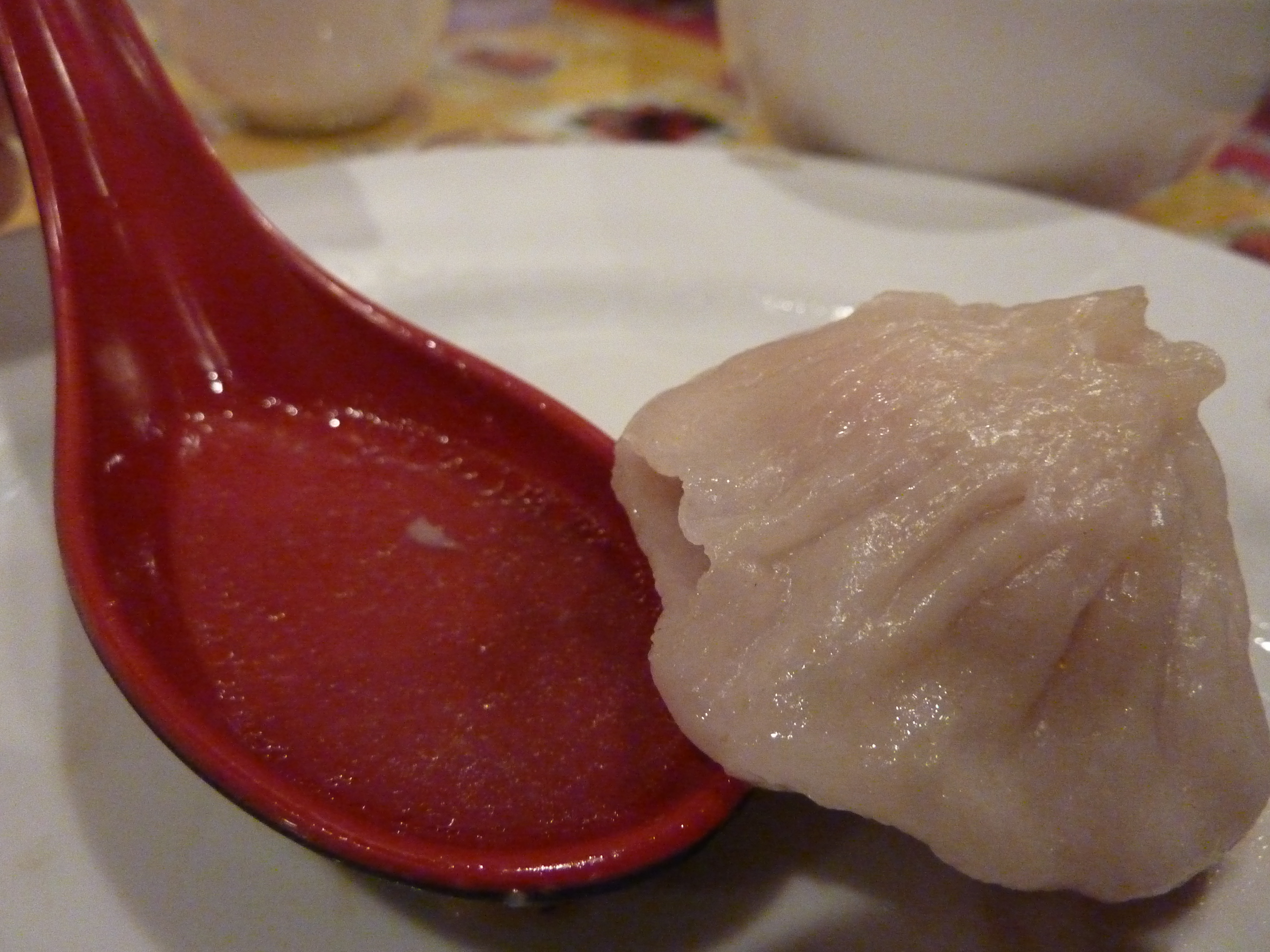
Soup Dumplings (or Xiao Long Bao) are probably the most recognizable Shanghainese food item to those even remotely familiar with the cuisine. They’re called soup dumplings for the pocket of meat juices that end up on the inside of that delicately thin dough. If the doughy exterior is too thick, that’s a restaurant you don’t want to go back to. Getting the perfect mix of thin dough and flavorful meaty interior is an extremely difficult task. And you want to eat these babies when they’re fresh out of the steamer, otherwise they get gummy.

For novices, just place one dumpling very carefully (so you don’t rip the dough) onto your Chinese spoon. Take a small bite out of the skin and let the soup spill into your spoon. Yummy soup is another good sign of a great dumpling. After you slurp that up, dip the dumpling into the accompanying black vinegar and ginger sauce.

Enjoy…and if it’s good, you definitely will.

So if you love Chinese food, you might want to think outside the takeout box and look for more regionalized Chinese fare. You’ll never look at Kung Pao Chicken the same way again.

Shanghainese Restaurants I’d Recommend:

SHANGHAI DUMPLING SHOP (Michelin recommended in 2010)
455 Broadway, Millbrae
(650) 697-0682
Must try: Soup Dumplings (Xiao Long Bao), Braised Lion’s Head Meatballs, Stir Fried Rice Cake

HAPPY CAFE
250 South B St., San Mateo
(650) 340-7138
Must try: Pork Chop Rice, Spicy Dry Cold Noodles w/Cucumbers & Pork, Boiled Chicken w/House Dressing

SHANGHAI DUMPLING KING
3319 Balboa St., San Francisco
(415) 387-2088
Must try: Soup Dumplings (Xiao Long Bao), Lion’s Head Meatballs Soup, Soup Noodles w/Pork and Preserved Vegetables

*This post is cross-posted on KQED’s Bay Area Bites.

Posted in Food, For Kids/Parent, Lunch, Peninsula, San Francisco, Street Food

With JapaCurry, It’s All About The Food

From SF Weekly to the Wall Street Journal, the JapaCurry food truck has been getting a lot of press lately for ruffling feathers with San Francisco restaurants located in the areas where the truck is parked.

But one question hasn’t been asked much through it all…How’s the food?

Well, fortunately for owner Jay Hamada, it’s damn good.

Japanese curry is different from Indian or Southeast Asian curries. It is sweeter and has a deeper, richer, meatier flavor base and color than those from other cultures.  It’s also one of the most common meals at dinner tables across Japan because it’s rather inexpensive to prepare.

Hamada’s recipe is purely his own.  He starts from scratch with 80 pounds of onions a day as the basis for each day’s batch of curry, caramelizing them to give the sauce a rich depth of flavor and adding thickness. A day’s batch of curry can take 6-7 hours to make. Just like with a homemade soup or stew, Hamada says homemade Japanese curry is better the next day. Many of these restaurants in his native Japan, let their curries sit for up to a week before serving it so the flavors have time to meld and develop.

Some have talked about their Chicken Katsu Curry lately, but using chicken is a variation of the original and more traditional Pork Cutlet, or “Tonkatsu” Curry served in Japan, so that’s what I opted for.  I was instantly impressed when I open the clamshell box.

The cutlet was breaded and fried to a perfect shade of golden brown and had streaks of brown katsu sauce over the top that not only added flavor, but made for a lovely presentation, especially considering the food came from a truck.

I was even more pleased once I bit into the pork. Despite a 10 minute drive back to my office, the breading was still crisp and never separated from the meat; a true sign of good tonkatsu. The meat itself was juicy and tender, not at all dry. It was obviously a good cut of pork because there was enough fat to ensure juicy meat, but not too much to seem greasy.

The curry was more of a sauce than a thick gloppy stew like you’d see at many Japanese restaurants around town. Hamada says that’s because many Japanese restaurants in America don’t make their curry from scratch. Many times they use curry stock cubes that you buy from an Asian supermarket.

The sauce had a definite kick, even though I ordered the “regular”, not that I’m complaining. The flavors were also much more robust and had a definite warmth that came from the variety of spices, including cumin, coriander, cardamom, mustard seed, turmeric, and a little bit of apple or peach, when in season, to add a touch of sweetness.

Hamada’s recipe is one he developed on his own, after stints at Tanpopo Restaurant in San Francisco and Wakuriya Restaurant in San Mateo. But his background is actually in technology. After getting laid off, he decided to give his passion for food another shot. He even returned to Tokyo to become a trained ramen maker.

But once he returned to the States, he noticed the food truck trend taking off. “I saw food trucks in downtown San Francisco and decided it was a better option because real estate was so expensive. And I used to work at an office, so I know that people want a quick lunch. I thought curry was better for that reason, and it’s easier to serve off a truck than ramen.”

The menu is extremely short with only pork or chicken cutlet, pork Kurobata sausage, veggie and veggie croquette curry options, plus the occasional bento box.  But this curry is the real deal.  The quality and flavor of my meal was excellent considering it came from a truck.  And eight dollars will get you a healthy portion that’ll satisfy your lunch craving.

Hamada says he has no plans to expand outside of San Francisco, for now, but he does want to expand his menu to possibly include a seafood and beef curry.  And he hasn’t abandoned his love of ramen, either. “I miss ramen!  That’s still my goal.  I’d love to have another truck, or maybe I’ll do a ramen restaurant.”

As for all this hoopla he’s been experiencing lately with the restaurants he’s offended downtown, he regrets not doing things differently in the beginning. “I would’ve introduced myself to the businesses in the neighborhood to explain what I do and let them know before I went out there. Overall, some restaurants are skeptical, but many want to try my food and are supportive.”

He admits, though, all this press attention has actually helped business. “My foot traffic has been great because people are curious.  Customers have been very supportive and say good things to me like, ‘Keep it up!’”

Some brick and mortar restaurants may not want a food truck in their neighborhood.  But the reality is if the food is good, people will come back, and the public will ultimately get to determine who stays and who goes.

JapaCurry Food Truck
Various locations in San Francisco, including Sansome and Pine, Howard and 1st St., Mission and New Montgomery, and 8000 Marina Blvd. in Brisbane.
11:30am – 1:30pm
@JapaCurry
www.japacurry.com

*This article is cross-posted on KQED’s Bay Area Bites website.

Posted in Dinner, Food, Lunch, San Francisco

A Classic Yet Modern French Bistro: Chez Papa Resto

Sometimes it’s hard to find a classic French meal. In a town where every new restaurant is trying to outdo the other, simplicity can be hard to find.

But the folks at Chez Papa Resto have it down pat. Yes, the portions might be a little bigger than those you’d find in Paris, but I’m not complaining. The decor here is also very San Francisco with deep colored walls, modern and sophisticated decor and rich purple drapes. But the food and service is very French, meaning the staff knows their stuff. But let’s not mistake that for pretentious. This is not that kind of place. The crowd is very hip San Francisco.

This is true right from the get-go. The waiter was friendly, accommodating, and slick, but not sleazy. We ordered the Prix Fixe menu, which included the Butternut Squash Soup, Steak Frites and Profiteroles for dessert. See, I told you it was classic French!

Butternut Squash Soup

Everything was just as you would expect. It was delicious, richly flavored, yet never too bold that the flavors were overpowering or in your face. It was a perfectly smooth and fresh soup, an expertly cooked piece of meat with delicious buttery garlic flavor and perfectly tasty fries, and the profiteroles were rich and delicious, but never too sweet.

The meal may have set me back a pretty penny, but it was an expertly crafted meal and a wonderful experience that took me back to Paris, so I’d say it’s worth it. Plus the fact that the location is so conveniently located close to San Francisco Center and the Mission and 5th Garage, certainly helps.

I had forgotten to take my credit card with me after we left the restaurant, so I returned shortly thereafter to retrieve it. The Manager who was also manning the host’s station was charming and funny. He even gave me a hug! And his heavy French accent was nothing short of adorable. The classic charming French man :). Even when I arrived, his dapper and nicely suited self was so accommodating, he asked if I liked my table or if he could do something to shade me from the sun that was shining in from the window in front of me.

All that attention to detail is what makes this place better than standard and different than just “simple”. It makes you appreciate the finer things that take a little extra effort. When someone cares about what they do, how they treat others and what they serve, it shows.

This is one of those places.

Chez Papa Resto on Urbanspoon

Posted in Dinner, East Bay, Food, For Kids/Parent, Lunch

Vegans, Vegetarians and Carnivores Dine Together at Gather

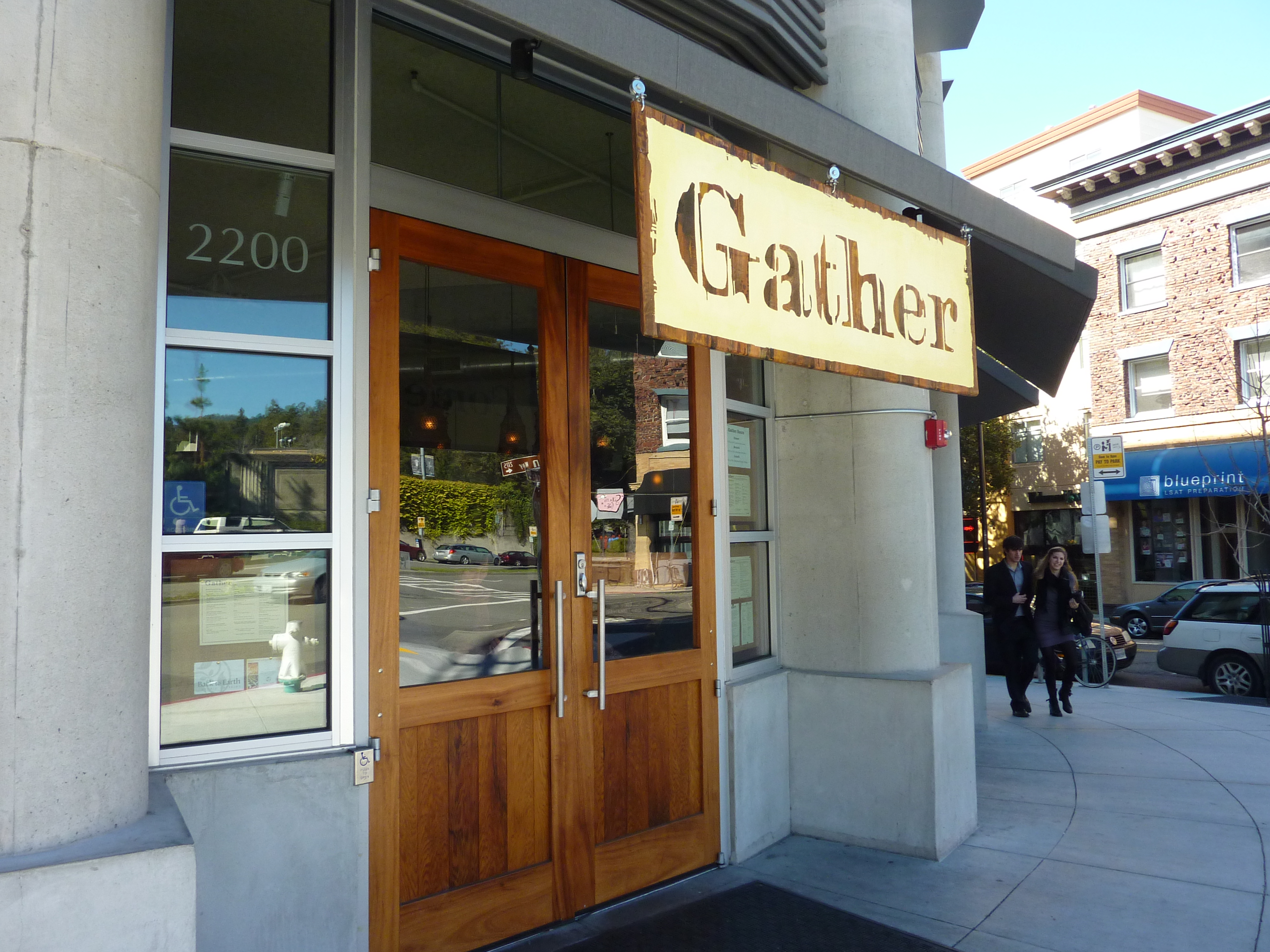
Can vegans, vegetarians and carnivores really share a foodie-worthy meal at the same table? They certainly can at Gather in Berkeley. And that’s just the way Esquire Magazine’s 2010 Chef of the Year, and Gather’s Executive Chef, Sean Baker, likes it.

“We want to show the same enthusiasm for every dietary preference, whether it’s lactose intolerance, gluten-free, or veganism. We want to make sure they all get to have the same experience.”

Chef Baker may be a classically trained chef who graduated from Le Cordon Bleu, but he’s always been personally interested in being meat-free, even becoming vegan for a time, before he went to culinary school. Now with his fiancee being vegan, he’s even more personally invested in making dishes everyone can enjoy.

“It’s frustrating,” he says. “We eat out a lot and sometimes she can’t have the same experience that I can. Veganism is not an eating style that is embraced by a lot of culinary folks.” Fortunately, Chef Baker says that thinking of a 50/50 vegan/meat menu comes to him quite naturally these days. Must be from his previous stints at Millennium Restaurant, San Francisco’s premier high-end vegan restaurant, and Gabriella Café in Santa Cruz, where he oversaw a meat-heavy menu that sometimes offered offal options.

Chef Baker says, “I read obsessively, eat out obsessively, and I cook obsessively. I love what I do. It’s never a struggle to come up with menus that appeal to everyone.”

But that doesn’t mean it requires less work.

He says, “Vegan food is much more labor intensive in the kitchen, but you can do a lot of great culinary techniques when preparing it. We spend hours and hours doing vegetable stocks. We smoke our tomatoes and caramelize our onions until they can’t be caramelized anymore. We blanch our cardoons and then sous vide them for six hours until they come out perfect. We’re always messing around with things to improve the flavor of food and improve our craft.”

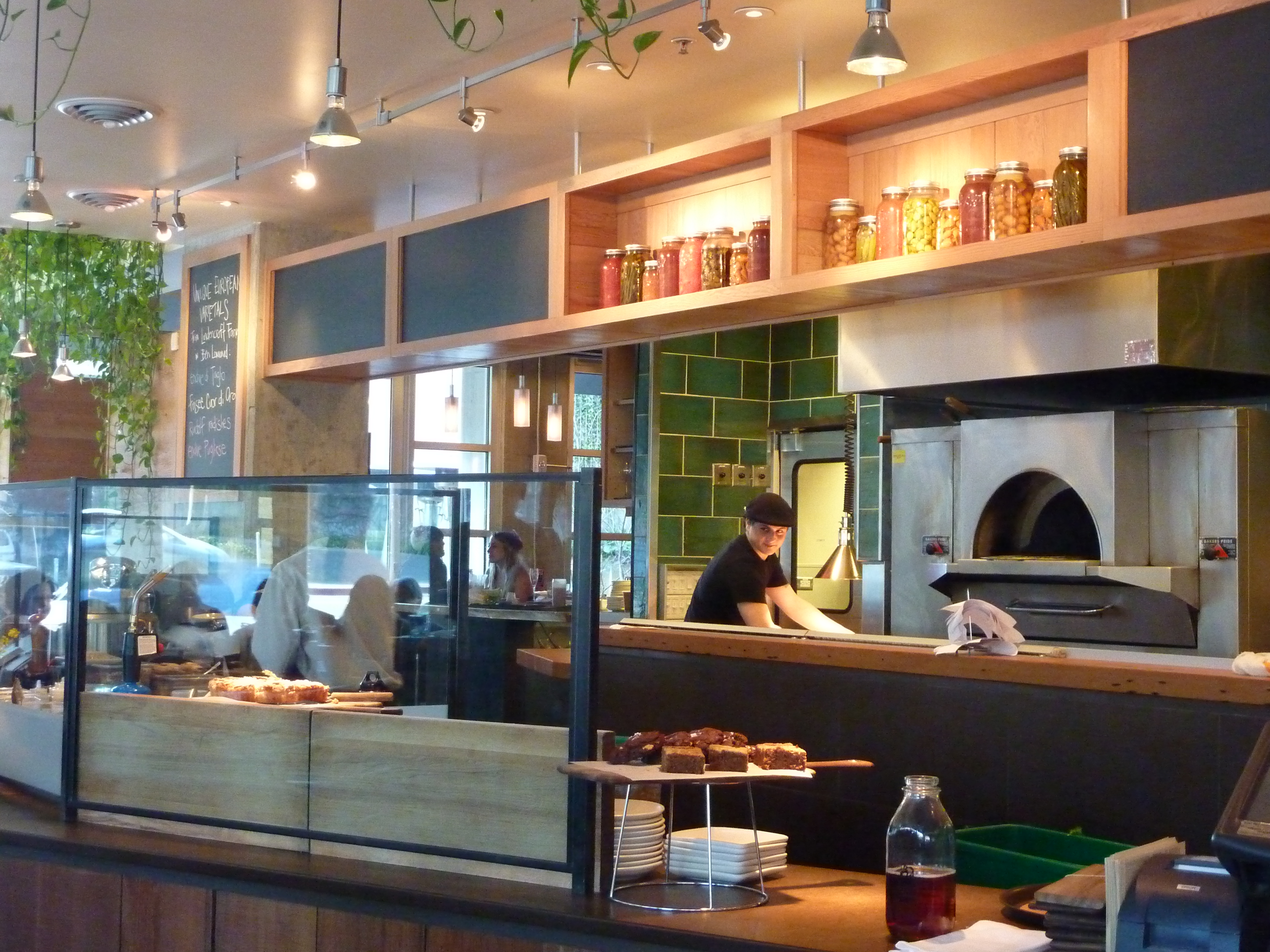
Chef Baker believes in offering comfort food in unpretentious surroundings that are not only beautiful, but eco-friendly. For example, they filter all of the water in the restaurant themselves, used recycled pickle barrels to create the back bar and cabinetry in the open kitchen, and even re-used old leather belts to make the seat cushions in the banquettes.

But this is no tree-hugging, alfalfa-loving hippy eatery. The menu here is inventive, surprising, and worthy of a four-star chef.

On a recent visit for brunch with some friends, we had the Egg Sandwich with bacon and mushrooms; the Acme Walnut French Toast with blood orange confit, cranberries and walnut sauce; and the Burrata salad with chicories, walnuts, anchovy and bruschetta.

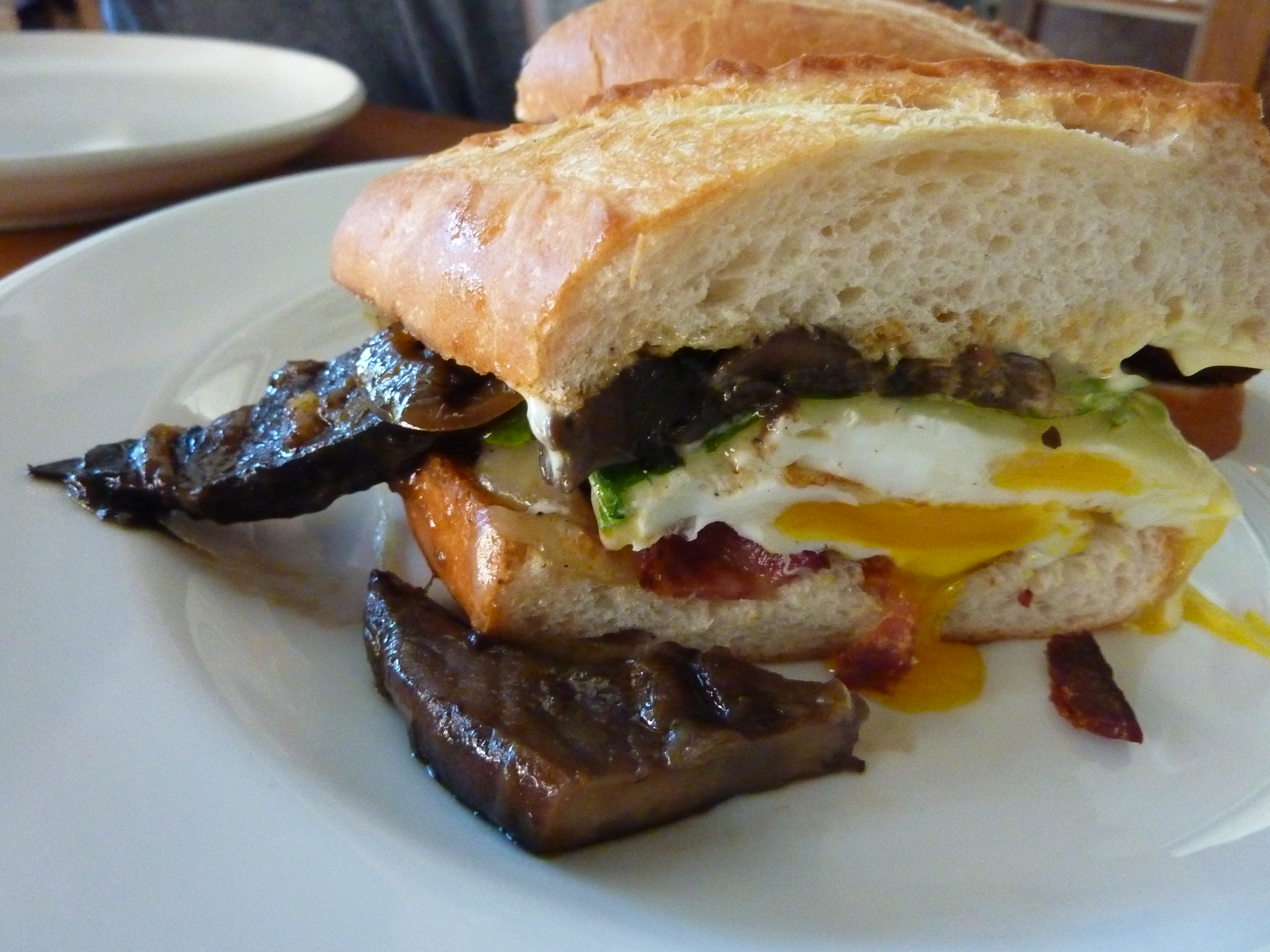
We loved the Egg Sandwich with its fresh torpedo Acme roll, smoky salty bacon and those fabulous braised Portobello mushrooms! Apparently they’d been cooked with red onions, smoked chopped tomatoes, their own veggie stock and something they call “tomato condiment” which is like a housemade ketchup. It’s the basis for many dishes and the Chef was nice enough to offer up the recipe below.

We also ordered two pizzas for the table, including the vegan Spicy Tomato with capers, olives, cashew garlic puree and herbs; and the Farm Egg Pizza with bacon and caramelized onions.

The vegan Spicy Tomato pie was the highlight of our entire meal, and I say that surprisingly because we were a table of hearty meat-eaters. We were skeptical that any vegan dish could satisfy, let alone surprise us, the way this pizza did. The flavor combination of the salty capers and olives with the zesty sauce and creamy nut puree made for a winning combination. And texturally, the crust on both pizzas was stellar. It was thin and crispy on the bottom, and the dough around the edges was soft and tender, like the perfect breadstick.

Each and every plate was fresh, bright and alive with flavor, thanks to all the fresh produce from the folks at Lindencroft Farms. And it’s not just high quality ingredients we tasted, it’s the obvious care in preparation.

“I don’t want the vegetarians to know they’re eating vegetarian food. I want you to feel like you’re eating something that tastes like steak,” says Chef Baker. “My goal when cooking is for people to try a whole new array of flavors every time they come in and make it fun for everyone at the table.”

Tomato Condiment
(Yields 9 quarts so scale down!)

12 qts red onion (1/4 inch dice)
3 qt apple cider vinegar
6 cups tomato paste
5 cups Sucanat (or natural cane sugar)
2 Tbsp. dried thyme
3 Tbsp. ground black pepper
1 Tbsp. ground clove
2 Tbsp. ground allspice
1 Tbsp. cayenne
6 oz pure olive oil
1.5 cups Tamari/Dark Soy Sauce
3 qts Water

Caramelize the onions and then fry the tomato paste. Add all other ingredients and reduce to slightly looser than ketchup consistency.

You can use this as a basis for braising vegetables and meats or as a condiment.

Gather on Urbanspoon

*This piece is cross-posted on KQED’s Bay Area Bites.

Posted in Dinner, East Bay, Food, Lunch, Peninsula, San Francisco, South Bay, Street Food

Food Trucks: Curry Up Now Is Here To Stay

Curry Up Now truck.
Curry Up Now truck. Photo: Rana & Akash Kapoor

As one of the first food trucks to hit the Bay Area culinary scene, Curry Up Now has seen all the trials and tribulations that come with this niche business. They specialize in authentic Indian street food with some fusion elements thrown in for good measure.

Their menu items and locations change regularly so it’s always a good idea to check their website, Facebook or Twitter posts for daily updates. But they usually have a few regulars on the menu that stay constant, including their made-to-order Chicken or Paneer Kathi Roll and creamy Chicken Tikka Masala Burrito, mixed with fragrant saffron basmati rice and then wrapped in a tortilla. But my personal favorite is the Deconstructed Samosa, which is their homemade potato and pea stuffed pastry pocket, fried and then topped with mini-samosas, spicy chickpea curry (chana), tomatoes, red onions, tamarind sauce, their secret green sauce and your choice of ground beef (keema), chicken or paneer (vegetarian option). Their food is so good, it’s now become a weekly craving for me. And I’m obviously not the only one because their fourth truck is expected to hit the East Bay soon.

Deconstructed Samosa
Deconstructed Samosa. Photo: Elaine Wu

I sat down with husband and wife team, Rana and Akash Kapoor, to ask them what they’ve learned, what’s next, and why it’s all worth it.

Where did the inspiration to start a food truck come from? You were one of the first ones on the scene.
AKASH: The idea started in early 2009. Then we got serious in the summer and launched on September 26th, 2009. It was a trend in Southern California and in Portland and we kind of took inspiration from everyone else’s ideas and threw ours in there and that’s how we started.

With weekly appearances in San Francisco, the Peninsula, the South Bay and now the East Bay, is your Bay Area wide domination complete?
AKASH: We’ve always wanted to serve our food to people all across the Bay Area. So now we’ve got 4 trucks hitting all the major areas, and we’d like one or two more as a “backup” or roving truck.

What are your plans for the future? I’d heard speculation at one point about franchising.
AKASH: Right now we’re very serious about opening a brick and mortar restaurant. In fact, it’ll hopefully happen within the next 90 days or so. That’s where we see the growth potential. We’re hoping eventually to start franchising and perhaps grow to multiple locations all over the country. A bit like a Chipotle or Panda Express, but with quality Indian food. The food quality is still and always will be the number one priority for us. But the restaurant will serve everything we do on the truck with perhaps 10 or 15 more items. Some things we’ve always wanted to serve but are impossible to make on the truck, like desserts and more entrées. As far as the trucks are concerned, we’ll keep them as is and maybe add a couple more. They all have to go through health inspections and the permit process. It takes a while.

What do you think the future is for street food in the Bay Area? Is it just a fad?
AKASH: I think the U.S., in general, adopted street food quite late and Northern California, in particular. There’s street food everywhere, especially on the East Coast. I think it’s here to stay.

RANA: It’s an alternative food movement for those who want to experience the food and culture of a region and the Bay Area street food scene is no different.

AKASH: I think because there seems to be a new truck on the scene almost every week, there’s gonna be consolidation and bigger players will take over because it’s hard to survive and grow and make money. Because if you don’t grow, you’re gonna go away.

We’re hearing a lot lately about brick and mortar merchants complaining that food trucks who park in their neighborhoods are stealing business from them. What are your thoughts around that?
AKASH: I believe some of these mom and pop places need to step up their game! Whether you’re a food truck or a sandwich shop, people have to like your food and you have to offer something different that you can’t get everywhere else.

RANA: We still go through it everyday with restaurants in the neighborhoods we visit. We went through it in Burlingame, but the city and the people have been great. One merchant came and cussed us out early on when we were out there. But you also have to be sensitive to the merchants around you. We try to stay away from restaurants that serve food similar to ours. If we park right in front of a coffee shop, we don’t serve chai because it’s probably on their menu, too. You have to be supportive. I mean, why not work together? There was one instance where the merchant came out and gave our customers samples! When you want to work together, something good can come out of it.

What is your opinion of other street food trucks? Are they competition or is it a community.
AKASH: People should respect when someone’s been in a location for a long time and not show up at the same time with the intent of stealing business. And it’s important for all of us food trucks to obey the parking rules. Everyone will get kicked out if someone steals 5 parking spaces. That doesn’t help anyone in the long run.

RANA: For example, if we want to go to a location that someone’s been at for a while, we call them directly and ask if it’s okay. Just call us! We’d love to build a community.

AKASH: I’ve actually been talking to the folks who run Off the Grid about starting an association for street food vendors and food trucks, especially in San Francisco. When traditional small businesses start bullying a food truck, whose going to advocate for us? We need a collective voice to represent this growing community.

You currently have over 4700 followers on Twitter and over 3600 Likes on Facebook. You’ve been through a lot of ups and downs, but your customers seem to be very loyal.
AKASH: They’re amazing. We listen to them and make changes all the time. When someone says that our food quality’s gone down, we listen. We call people who take the time to tell us how we’re doing. We make changes immediately.

What sort of wisdom can you impart to newer trucks going through it all?
AKASH: People need to do their homework before they go out. We didn’t and we’re still learning.

If it’s so much trouble, why keep doing it?
RANA: The passion. It’s always been there and it’s been a dream for both Akash and I. We’ve always loved to cook and entertain. And I love people. For me, I want people to tell me how they feel about the food and communicate with them. When people care, something good always comes out of that.

Posted in Dinner, Food, Travel

This is LA: Mario Batali’s Osteria Mozza

Venice Beach

I recently made a quick trip down to LAX for a video shoot with BlogHer CEO, Lisa Stone. We were invited to do a funny tongue-in-cheek Super Bowl video for Network Solutions with the legendary Cloris Leachman. It’s been over six years since I’d set foot on a television set, but it felt like old hat. And Cloris and her son/agent, George Englund, were an absolute hoot and kept us in stitches all day.

I realized that although I only live one hour away by air, I hadn’t been to Los Angeles in over 11 years! Crazy, I know. So since I don’t get down there very much, I wanted to make sure I went to at least one restaurant on my “must-try” list.

So I made a reservation at Mario Batali’s Osteria Mozza. I always got the impression Batali’s restaurants were impressive, regardless of his celebrity. I was eager to see if this was true.

My friend, Rene, and I decided to go family style and order a variety of things. We started with the Crispy Pigs Trotter (pig’s feet), and the Burrata with Leeks & Mustard Breadcrumbs. We weren’t sure what to make of the pig’s trotter since neither of us had eaten it before, but we enjoyed it. It had a creamy, rich, smooth mouthfeel and a savory, meaty fat flavor. The closest thing I can think of to it in flavor and mouthfeel would be bone marrow, since both are very fatty. But I’m glad I tried it. And I loved the amount of crispness in the breading. It was fried to a perfect golden brown and crisp without a touch of grease.

Burrata w/Leeks & Mustard Vinaigrette

The Burrata and Leeks were a delight. I’m curious as to how they got the leeks to this soft texture and regret not asking our server. And the dijon vinaigrette had just enough tang to cut through the buttery leeks and smooth creamy cheese. The breadcrumbs on top, of course, added texture. It was a very well conceived dish.

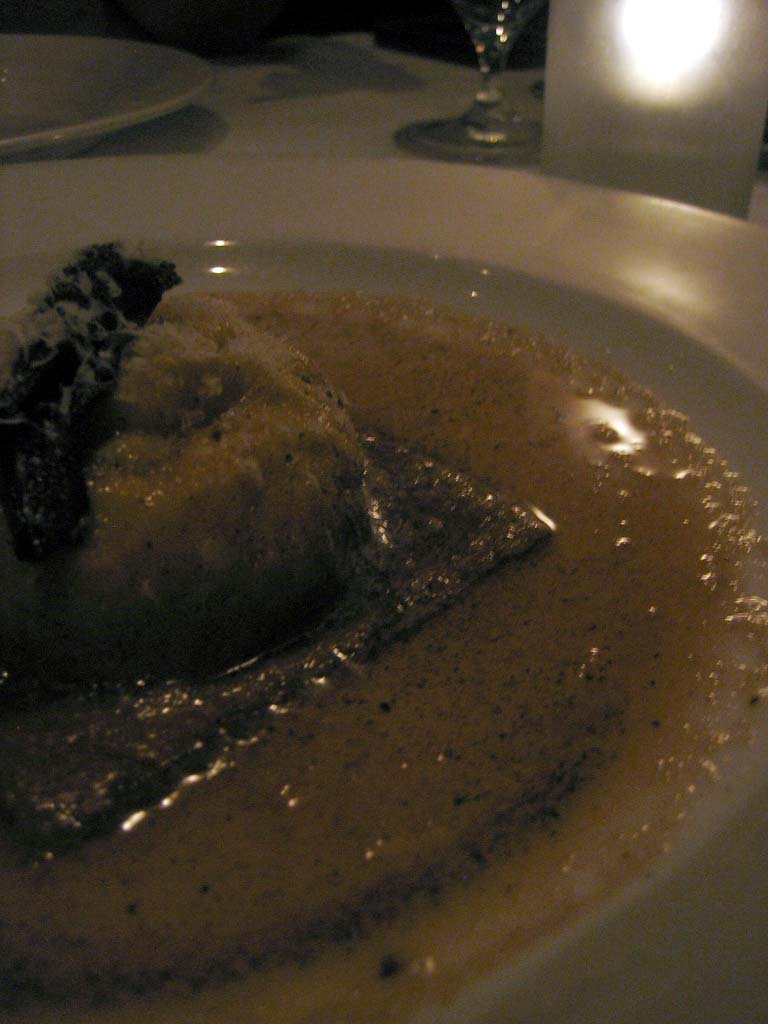
For our pasta course, we shared what was to be my favorite dish of the night. It was the Ricotta and Egg Raviolo, which was just one large housemade pasta pocket with a soft egg on top that oozed its orangey yolk when you cut into it. The ricotta was creamy, light and airy, and it all sat in a small pool of browned butter. It was awesome and far and away the best pasta dish I’d had in a while. It was rich and decadent yet clean and simple. Perfect.

Egg & Ricotta Raviolo

We ended on the meat entree: the Grilled Beef Tagliata with Parmigiano and lightly dressed arugula on the side. The aged balsamic they used on the arugula was sweet with the flavor of grapes and had a little tang, just like a quality aged balsamic vinegar should taste. It also graced the beef tenderloin giving the meat a slight peppy, zesty flavor. It was grilled a perfect medium-rare, flavorful, juicy, and expertly prepared.

The decor for this large space is slightly industrial with it’s high ceilings and large wrought iron light fixtures, yet intimate enough with its dim lighting and comfortably spaced tables. It was sophisticated but not overly warm or pretentious, which helped the mood. It’s a great place for a special occasion or date, but not stuffy, which is perfect for LA. The place was packed all night and we were lucky to get seated earlier than our reservation.

Though our meal was wonderful and certainly memorable, I’m not in a rush to return. It was a great dining experience, just not a regular haunt that I’d crave. I think I’ll head to Batali’s equally buzzed about, Pizzeria Mozza, just next door, on my next trip down South.

Osteria Mozza on Urbanspoon

Posted in Dinner, Events, Food, Travel

A Guide to Chinese New Year Foods

Chinese New Year 2011 is the Year of the Rabbit

As an American, I celebrate Thanksgiving like everyone else. My table is filled with stuffing, green bean casserole and the proverbial roast turkey every Fall.

But as an Asian American, I also get a second Thanksgiving, of sorts.

Chinese New Year is an annual event that falls on a different date each year because of the lunar calendar, but it’s usually in February or March. It’s also a holiday that’s filled with a whole lot of food and family.

But unlike the Thanksgiving tradition of gorging ourselves silly, a Chinese New Year’s Eve feast is filled with food for different reasons.

Because it is sacrilege to cook on Chinese New Year Day (You’re not supposed to touch a knife or an open flame at any point during the day. It’s bad luck!), the abundance of food also has a practical purpose. You’re supposed to eat the leftovers throughout the next day or so. These traditions were made before microwaves, after all.

The feast itself is also filled with symbolism, as is with many Chinese traditions.

A few must haves on the table:

A Whole Fish: It needs to be complete from head to tail to symbolize completion and wholeness. If you serve parts of it, your luck will be “cut off” so to speak.
Tangerines: They look like gold bouillons in theory, so they symbolize wealth and luck in the new year. And leave the stem and leaves on! They’re also good luck.
Noodles: These are served on Chinese New Year AND on your birthday to symbolize a long life. And don’t bite, slurp! (It’s not impolite to do so in the Chinese culture.) You cut off your luck if you bite your noodles!
Pomelo: This golden yellow fruit symbolizes abundance and prosperity.
Seeds (pumpkin, sunflower, watermelon, etc.): Fertility and abundance.
Black Moss Seaweed: The stringy look of this dish symbolizes long life and wealth
Bamboo Shoots: Wealth and new beginnings
Chicken: Family and happiness, and of course, must be served whole (just like the fish)
Eggs: Fertility (of course)

This is just a partial list, but everything on the table during the holiday is very intentional.

So go on, this Chinese New Year’s Eve (which also falls on Groundhog Day and my daughter’s birthday) celebrate with a bowl of your favorite noodles, some chicken or fish, and then have a tangerine or two for dessert. Your year should be brimming with good luck.

And here’s a link to some other foods traditionally served on Chinese New Year, along with what they symbolize.

*This article is also cross-posted on BlogHer.